
AI-Powered Sentiment Analysis Case Study: Transforming Support
When customer support ticket volumes at mid-sized SaaS company TechFlow exceeded 15,000 monthly interactions, their support team struggled to prioritize urgent issues, identify systemic problems, and maintain quality standards. Manual triage consumed hours daily, escalations were missed, and customer satisfaction scores declined quarter-over-quarter. Leadership recognized the need for data-driven operations but lacked insights into what customers actually felt about product issues, feature requests, and support experiences. This case study examines how implementing AI-powered sentiment analysis transformed their support operations with measurable business impact.
TechFlow's journey with AI-Powered Sentiment Analysis began when their VP of Customer Success proposed using machine learning to automatically categorize and prioritize tickets based on emotional intensity and sentiment. The hypothesis was straightforward: customers expressing frustration or anger likely faced critical issues requiring immediate attention, while neutral or positive tickets could follow standard queue processes. Implementing this capability would require technical infrastructure, model training on historical tickets, and process changes—but promised significant operational improvements.
Initial State and Challenges
Before implementation, TechFlow's support operations faced several critical issues:
- Missed Escalations: Angry customers waited in standard queues while routine questions got immediate attention
- Inefficient Routing: Tickets distributed randomly rather than matched to agent expertise
- No Trend Visibility: Product and engineering teams received anecdotal feedback, not systematic insights
- Reactive Operations: Problems identified only after accumulating complaints
- Agent Burnout: Handling emotionally charged interactions without warning contributed to high turnover
Metrics reflected these challenges. Customer Satisfaction (CSAT) scores averaged 72%, below industry benchmarks. Average resolution time was 38 hours. First-response SLA compliance stood at 81%. Agent turnover reached 35% annually. The business case for AI-powered sentiment analysis centered on improving these metrics while scaling support without proportional headcount increases.
Implementation Approach
TechFlow partnered with their engineering team to build a custom sentiment analysis pipeline using open-source tools. The implementation followed a phased approach:
Phase 1: Data Preparation (Month 1)
The team extracted 50,000 historical support tickets and randomly sampled 2,000 for manual labeling. Five support managers labeled tickets across three sentiment categories (positive, neutral, negative) and three urgency levels (low, medium, critical). Inter-rater agreement was validated at 87%, ensuring consistent training data.
Phase 2: Model Development (Months 2-3)
Data scientists fine-tuned a DistilBERT model on the labeled tickets. Initial accuracy reached 83% for sentiment classification and 76% for urgency prediction. After incorporating domain-specific vocabulary and retraining with an expanded 5,000-ticket labeled dataset, accuracy improved to 91% for sentiment and 84% for urgency. The team validated the model against held-out test data and conducted user acceptance testing with support managers.
Phase 3: Integration and Deployment (Month 4)
Engineering integrated the sentiment model with TechFlow's Zendesk instance via webhook. When tickets arrived, the system automatically:
- Analyzed ticket text for sentiment and urgency
- Added tags indicating sentiment scores
- Adjusted priority levels for high-negative-sentiment tickets
- Routed critical issues to senior agents
- Logged sentiment data to analytics warehouse
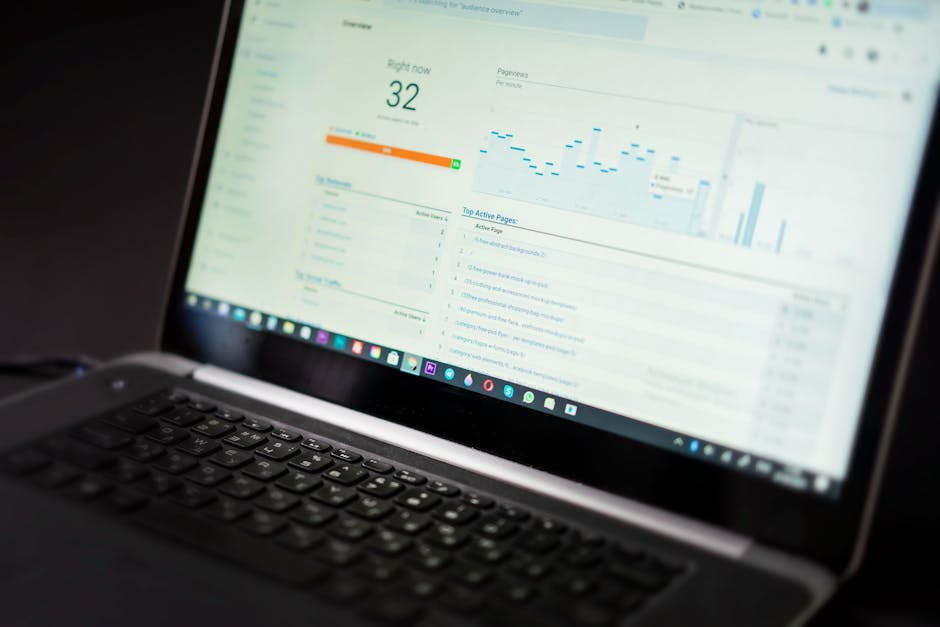
A dashboard provided real-time visibility into sentiment trends across products, features, and time periods.
Phase 4: Process Optimization (Months 5-6)
With AI-powered sentiment analysis deployed, TechFlow refined routing rules, established escalation protocols for negative sentiment thresholds, and trained agents to review sentiment scores before responding. Product managers received weekly sentiment reports highlighting pain points and feature request patterns.
Measurable Outcomes
Six months post-deployment, TechFlow measured impact across multiple dimensions:
Customer Satisfaction Improvements
- CSAT Score: Increased from 72% to 84% (+12 percentage points)
- Escalation Rate: Reduced by 43% as critical issues were identified and addressed faster
- First Response SLA Compliance: Improved from 81% to 94%
- Average Resolution Time: Decreased from 38 hours to 26 hours (-32%)
Customers expressing negative sentiment now received responses 3.2x faster than before implementation, directly addressing the highest-impact pain points.
Operational Efficiency Gains
- Agent Productivity: Average tickets resolved per agent increased 18%
- Manual Triage Time: Reduced by 85% (from 12 hours/week to 1.8 hours/week for support managers)
- Routing Accuracy: Improved ticket-to-agent matching reduced reassignments by 29%
- Agent Turnover: Decreased from 35% to 22% annually as workload became more manageable
The support team handled 22% more tickets with the same headcount, delivering $180,000 in avoided hiring costs annually.
Product Development Insights
Sentiment analysis revealed actionable intelligence that transformed product roadmap prioritization:
- Identified that negative sentiment spiked 240% around a specific feature launched three months prior, prompting UX redesign that reversed the trend
- Discovered strong positive sentiment for a beta feature, accelerating GA release by two quarters
- Quantified customer frustration with a long-standing bug affecting only 3% of users but generating 18% of negative-sentiment tickets, justifying prioritization
Product managers reported that systematic sentiment data replaced gut-feel decision making with evidence-based prioritization.
Financial Impact
TechFlow quantified the ROI of their AI-powered sentiment analysis implementation:
- Implementation Cost: $85,000 (labor, infrastructure, tools)
- Annual Operating Cost: $24,000 (compute, maintenance)
- Annual Benefits: $340,000 (avoided headcount, reduced churn from improved satisfaction, operational efficiency)
- ROI: 312% in year one
- Payback Period: 3.2 months
Lessons Learned
TechFlow's implementation journey surfaced several key insights:
- Domain-Specific Training Matters: Generic sentiment models achieved only 76% accuracy; fine-tuning on company-specific language improved results substantially
- Human-in-the-Loop Remains Important: Complete automation was less effective than AI-assisted workflows where agents reviewed sentiment scores
- Change Management is Critical: Success required training agents, adjusting incentives, and securing buy-in from skeptical team members
- Continuous Improvement: Monthly model retraining on new labeled data prevented accuracy degradation as language evolved
- Start Small, Scale Gradually: Piloting with one product team before company-wide rollout identified issues early
Conclusion
TechFlow's experience demonstrates that AI-powered sentiment analysis delivers measurable business value when implemented thoughtfully with clear objectives, quality training data, and process integration. The 12-point CSAT improvement and 32% reduction in resolution time directly impacted customer retention and operational costs. Beyond metrics, sentiment analysis shifted the organization from reactive firefighting to proactive issue identification and data-driven decision making. Their success provides a replicable blueprint for companies seeking to leverage AI-Driven Sentiment Analysis for competitive advantage in customer experience and operational excellence.